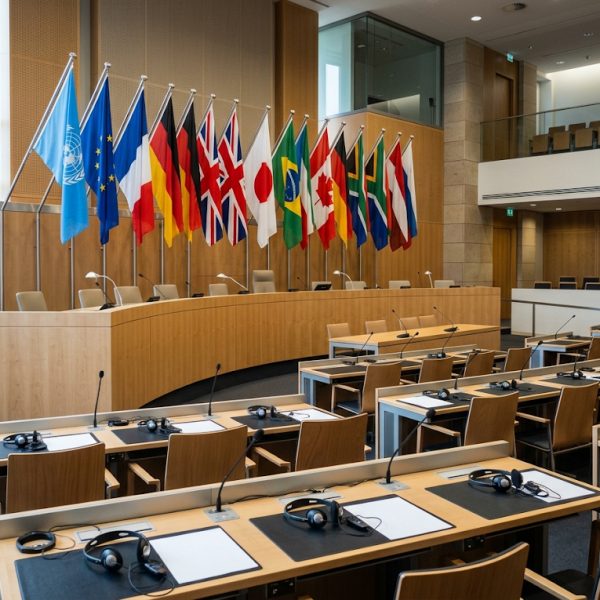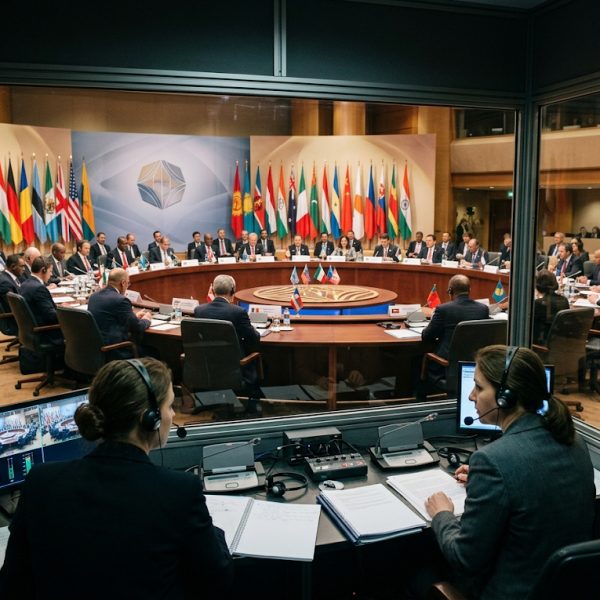
International organizations that rely heavily on multilingual proceedings, such as the United Nations, maintain permanent interpretation staff who work in relay teams throughout lengthy sessions, switching every twenty to thirty minutes to preserve accuracy under the intense cognitive demands of simultaneous interpretation. The United Nations interpretation service describes this rotation as essential to maintaining precision during multi-hour debates.
Smaller bilateral meetings present a different challenge, since a single interpreter may need to work alone for extended periods without the support of a relay team, placing significant pressure on accuracy during sensitive exchanges where a government's public position may hinge on a handful of carefully chosen words.
Preparation for a major summit often begins weeks in advance, with interpreters studying briefing documents, past statements from each delegation, and even regional dialects or speech patterns specific to the individual leaders involved. This groundwork allows them to anticipate turns of phrase that might otherwise catch them off guard during a live exchange, where hesitation can be read by observers as uncertainty about the substance of what is being said.
Some interpreters describe the role as closer to acting than translation, since conveying tone, emphasis and even calculated pauses accurately can matter as much as the literal words themselves. A leader's attempt at humor, for instance, needs to land as intended rather than falling flat or, worse, being misread as an insult in the target language, a risk that experienced interpreters learn to navigate through years of practice.
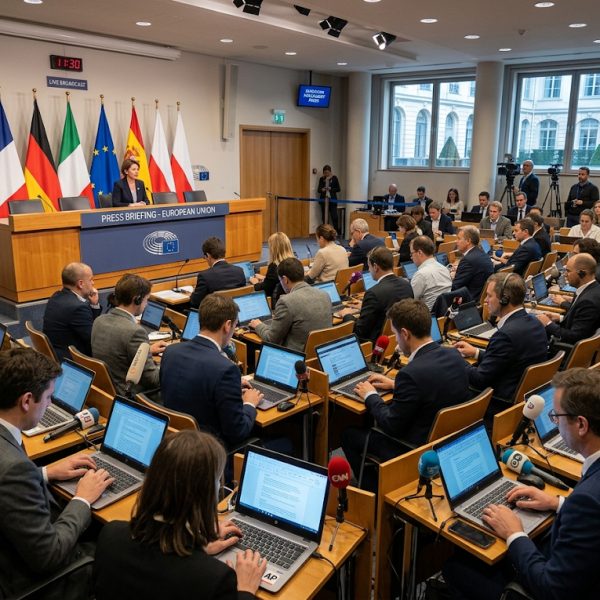
As tensions rise in a negotiation, interpreters sometimes become an unofficial pressure valve, softening or clarifying phrasing in real time to keep discussions from stalling over a misunderstanding rather than a genuine disagreement. Diplomats who have worked alongside the same interpreter for years often describe a level of trust that borders on partnership, with each side relying on the other's judgment in moments too fast-moving for formal consultation.Journalists covering these events increasingly seek out former interpreters as sources, since they can offer rare insight into the texture of a negotiation that official transcripts and press releases tend to flatten into neutral, sanitized language, stripped of the tone and hesitation that often reveal more about a summit's true dynamics than the final joint statement ever does.When world leaders sit down for high-stakes diplomatic summits, the cameras usually focus on handshakes, seating arrangements and prepared statements. Rarely do they linger on the interpreters seated just behind or beside the principals, yet these professionals often shape how an agreement is understood, remembered and reported long after the meeting ends.
Diplomatic interpretation is a fundamentally different discipline from conference or business interpreting. A single misplaced qualifier, an overly literal rendering of an idiom, or a subtle shift in tone can alter how a commitment is perceived by domestic audiences on either side, sometimes triggering political consequences that outlast the summit itself.
That distinction shows up even in how the commercial side of the profession is organized, where assignments are categorized by setting rather than by language alone. PoliLingua, for instance, separates conference, legal and medical interpreting, each carrying its own expectations about register and procedure. Diplomatic work sits beyond all three, since the interpreter is handling not only terminology but the political reading of every hedge. The underlying skills overlap, but the briefing material and the consequences of an error do not.
Historians studying past negotiations have pointed to several instances where an interpreter's phrasing became a point of diplomatic friction, prompting officials afterward to issue clarifications distinguishing between what was actually agreed and what had been reported in translation. These episodes rarely make headlines at the time, but they shape how future summits are prepared.
As international coverage of these events grows increasingly detailed, newsrooms have had to invest in more rigorous verification of translated statements before publication. Some outlets now rely on professional french translation services to cross-check official transcripts against original recordings, particularly when a story hinges on the precise wording of a joint statement.
Interpreters at diplomatic summits carry a responsibility that far exceeds their visibility, since a single hesitation can be read as a position. Commercial negotiation puts them under comparable pressure whenever the subject matter is technical. Talks involving biotech companies are notoriously demanding, because the vocabulary is specialised and the licensing terms turn on precise wording.
Legal teams advising governments on the wording of formal agreements face similar pressure, since binding documents often need to be produced in multiple authoritative language versions simultaneously. In such cases, french legal translation services are frequently engaged to ensure that each version carries identical legal weight, leaving no room for later disputes over interpretation.
According to background material published by the Diplomatic language entry on Wikipedia, the deliberate ambiguity sometimes built into diplomatic texts is itself a negotiating tool, allowing parties to sign the same document while interpreting certain clauses differently for their own domestic audiences.
Interpreters working at this level typically train for years before being trusted with head-of-state assignments, developing not only linguistic fluency but also a deep familiarity with the political history and sensitivities surrounding each relationship they are asked to mediate.
Technology has begun to play a supporting role as well, with some delegations now using real-time transcription tools to create a parallel written record of spoken exchanges, though officials caution that these tools remain far from a substitute for an experienced human interpreter in politically sensitive settings.
As global summits continue to multiply in frequency and complexity, the demand for interpreters capable of handling both the linguistic and political dimensions of the role shows no sign of slowing, reinforcing their often invisible but consequential position at the negotiating table.